
Cappuccino UK Price & Calories 2026
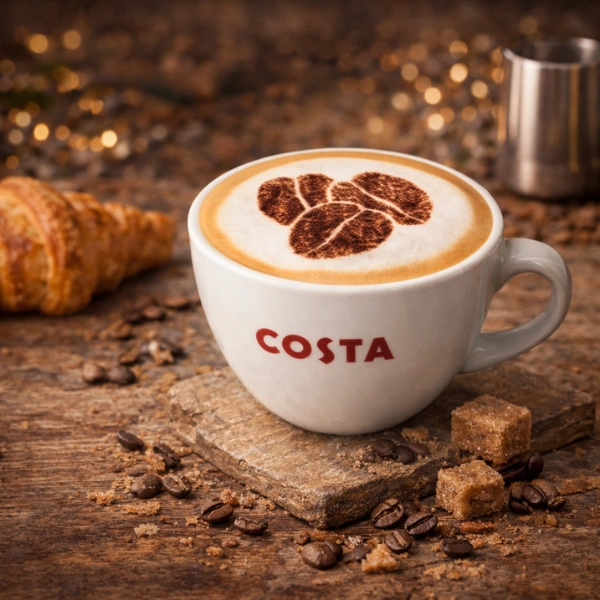
I grabbed a Cappuccino from a Costa beside a busy bus stop, with family in tow and everyone picking something different. My friend and I went for takeaway since this isn’t the kind of drink you want to linger over for ages. If you’re after a coffee with a proper foam cap and a bit of texture, this is the one. The foam holds up well even if you’re carrying it out the door.
Prices for a Costa Cappuccino in the UK start at £4.15 for a Small and go up to £5.05 for a Large, with three sizes to pick from. Calories range from 141 kcal in the Small to 229 kcal in the Large. All sizes contain milk as an allergen. If you care about price, calories, or just want to know if the foam is worth it, here’s what actually matters.
Nutrition, allergen and product details are based on Costa Coffee’s official product information. Prices shown are estimated UK prices and may vary by store, order type and delivery platform. Information last reviewed: 24 July 2026.
| Nutrient | Per 100g | Standard (332ml) |
|---|---|---|
| Energy (kcal) | 42 | 140 |
| Energy (kJ) | 179 | 593 |
| Carbs (g) | 4.9 | 16 |
| Sugars (g) | 4 | 13 |
| Fat (g) | 1.4 | 4.5 |
| Saturates (g) | 0.9 | 2.9 |
| Protein (g) | 3 | 10 |
| Salt (g) | 0.11 | 0.36 |
Customize Your Signature DrinkTailor the size, milk, and flavors to your preference and check the nutritional information expand_more
Key Points to Know About Your Cappuccino
- Small: £4.15, 141 kcal, 247 ml
- Medium: £4.60, 190 kcal, 332 ml
- Large: £5.05, 229 kcal, 422 ml
- Large costs 90p more than Small, with 88 more kcal
- All sizes contain: Milk (allergen)
- Switching to coconut milk drops 85 kcal from Medium
Small vs Medium: which one is actually worth it?
The Small Cappuccino at Costa Coffee costs £4.15 and gives you 247 ml, while the Medium is £4.60 for 332 ml. That’s 45p more for an extra 85 ml and 49 more kcal. The Medium is the right size for most people — you get a bigger hit of foam and milk, and it actually feels like a proper coffee-shop drink. The Small is fine if you’re in a rush or just want something to sip while waiting for a bus, but it doesn’t last long. The Large, at £5.05, is only worth it if you genuinely want 422 ml of coffee and don’t mind 229 kcal — it’s a lot of milk and foam, and most people won’t finish it before it cools. Cappuccino small vs medium — which is better? Medium wins on value and experience unless you’re counting every penny or calorie.
Cappuccino calories and sugar — the actual numbers
A Costa Cappuccino has 141 kcal in Small, 190 kcal in Medium, and 229 kcal in Large. That’s about the same as two rich tea biscuits for the Medium, or just over three for the Large. For comparison, a can of Coke has 139 kcal, so even the Large Cappuccino is in the same ballpark.
Sugar goes from 9.8 g in the Small to 15 g in the Large, all from the milk. Fat rises from 7.4 g up to 12 g as you go up in size. If you’re watching either, the Medium is a middle ground. Cappuccinos are milk-forward, so you get more calories and sugar than an Americano, but that’s the trade-off for the foam and texture.
| Size | Portion (ml) | Energy (kcal) | Energy (kJ) | Sugar (g) | Fat (g) | Saturates (g) | Carbs (g) | Protein (g) | Salt (g) |
|---|---|---|---|---|---|---|---|---|---|
| Small | 247 | 141 | 587 | 9.8 | 7.4 | 4.8 | 12 | 7 | 0.25 |
| Medium | 332 | 190 | 791 | 13 | 10 | 6.4 | 16 | 9.6 | 0.33 |
| Large | 422 | 229 | 951 | 15 | 12 | 7.7 | 19 | 12 | 0.42 |
Nutrition values increase with portion size, reflecting both the volume and milk content. This makes milk selection especially impactful, as some alternatives significantly adjust calories and macronutrients.
Milk options: what actually changes?
If you swap the default whole milk in your Medium Cappuccino for oat milk, it costs 45p extra and knocks off 17 kcal, 3.2 g sugar, 2.2 g fat, and 5.5 g saturates — but adds 5 g carbs and 0.08 g salt. Coconut milk is the biggest calorie saver, dropping 85 kcal and 6.2 g fat, but also costs 45p more. Soya milk is free to swap and cuts 60 kcal, 5.2 g sugar, and 5 g fat from the Medium. All the extras like an extra espresso shot, marshmallows, or syrups are just a price add-on — they don’t change the nutrition numbers here.
For the lowest calories: coconut milk.
For the full version: whole milk as served.
Allergens in the Cappuccino
Milk: Contains (Small, Medium, Large)
Allergen information can change — always check in-store before ordering if you have a food allergy.
My honest pick
Thinking back to that bus stop takeaway, the Medium Cappuccino just makes sense for most people. It feels like a proper coffee, gives you enough foam to enjoy the texture, and at £4.60 for 332 ml, it’s not a rip-off. If you’re watching calories, the Small at 141 kcal is a safe bet, but it’s over quickly and doesn’t feel like much of a sit-down drink. The Large is only worth it if you want to nurse a coffee for ages or really like a lot of milk — otherwise, it’s just more to carry and more calories for 45p extra. Last time, my Medium stayed hot long enough to finish before the next bus rolled in. For value and experience, Medium wins. For lowest calories, pick Small or swap to coconut or soya milk.
Frequently Asked Questions

Disclaimer
Prices shown are typical UK menu estimates for 2026 and may vary by store location, promotions, delivery services, or eat-in vs takeaway pricing. Nutritional values are based on standard drink configurations and may change depending on size, milk choice, extras, or recipe updates made by the brand.